Did You Know
- Kellogg’s® Frosted Flakes®, Kellogg’s Rice Krispies® and Kellogg’s Corn Flakes® are made with 4 simple ingredients, plus vitamins and minerals.
- 100% of Kellogg’s® cereals are free from high-fructose corn syrup.
- We are eliminating artificial colors from our full cereal portfolio by the end of 2026
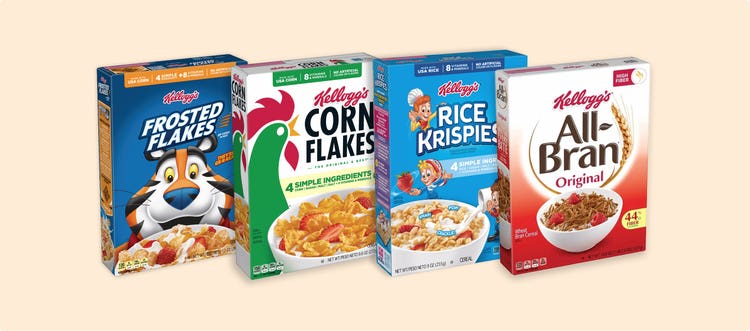
At WK Kellogg Co, we make eating well easy, staying true to our roots by offering cereal with simple ingredients and evolving to meet modern consumer preferences.
- Many Kellogg’s® cereals are made with ingredients you’d find in your pantry - cooked in a similar way you’d make your grains at home, just in larger batches!
- ~75% of Kellogg’s® cereals are simply puffed, toasted, flaked, or shredded.1
Featured Recipes

- Based on 2024 North American sales volume.
Did You Know
- A bowl of cereal and milk has as much protein as an egg.*1
- Kellogg’s® Raisin Bran® and Frosted Mini Wheats® provide 5 grams* of protein from grains alone!
- Kashi GO® and Special K® Protein provide 10g*+ protein.
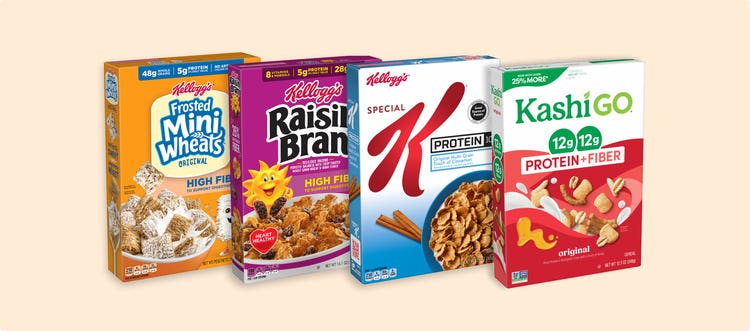
Cereal and milk bring grains and protein together to offer an easy, effective solution for building meals to help manage hunger and support wellness.
- 90% of cereal is eaten with milk, which adds 6g* of high-quality protein to your bowl.2
- Stack protein and fiber like Greek yogurt and Kellogg’s Raisin Bran® for up to 17 grams of protein and 7 grams of fiber. *
- A bowl of cereal and milk can deliver fiber, protein, vitamins and minerals, and hydration for under 300 calories.
Featured Recipes
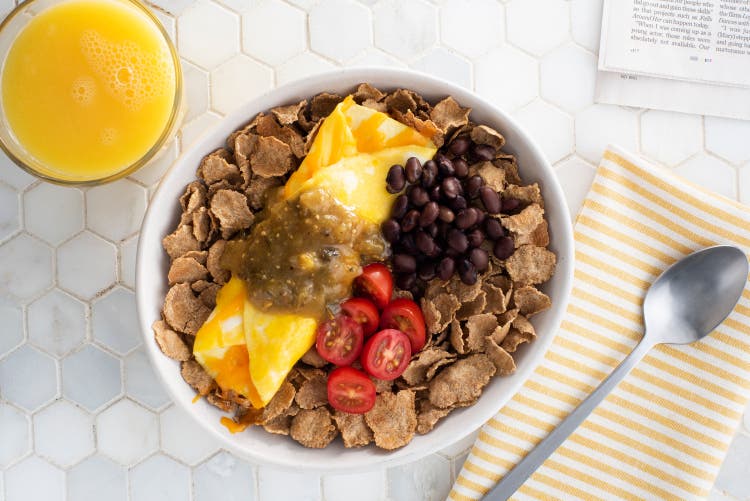
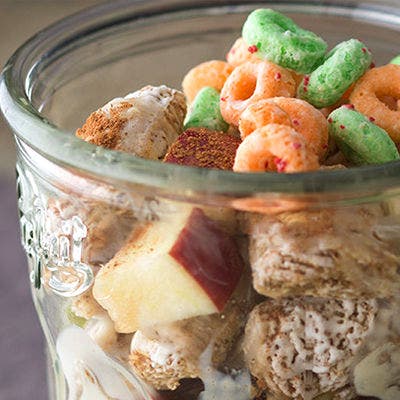
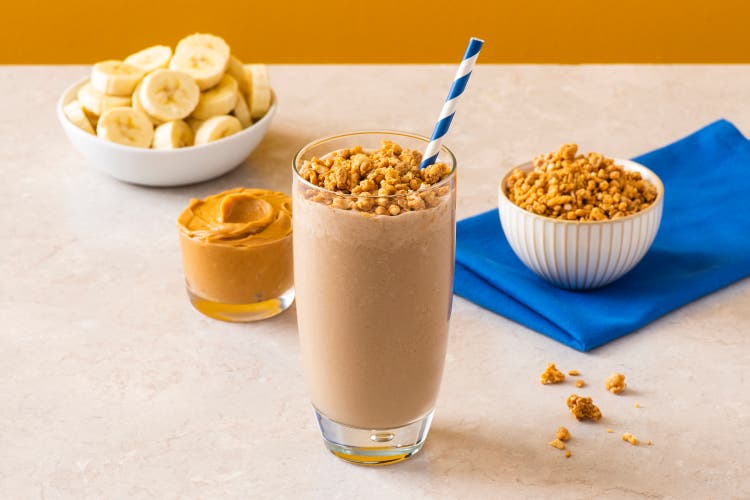
*Nutrition information based on 1 large egg, ¾ cup skim milk, 170g plain, nonfat, Greek yogurt using USDA’s Food Data Central. 1 large egg 12%DV, ¾ cup skim milk 12% DV, 170g yogurt 34% DV, 1 serving Raisin Bran 4% DV, Frosted Mini Wheats 4% DV, Kashi Go Original 16%DV, Special K Protein 13%DV.
- 1 large egg contains 6 grams protein; a bowl of cereal with ¾ cup milk provides upwards of 6 grams protein*
- Zhu Y, Jain N, Vanage V, Holschuh N, Agler A, Smith J. Association between ready-to-eat cereal consumption and nutrient intake, nutritional adequacy, and diet quality in adults in the national health and nutrition examination survey 2015–2016. Nutrients. (2019) 11:2952. doi: 10.3390/nu1112295
Did You Know
- Cereal is a top source for fiber and whole grains for kids at breakfast.1
- Look for Kellogg’s® cereal with 3g or more fiber per serving to help get to the recommended 28g each day!
- Kellogg’s® Raisin Bran® and Frosted Mini Wheats® are high fiber cereals.
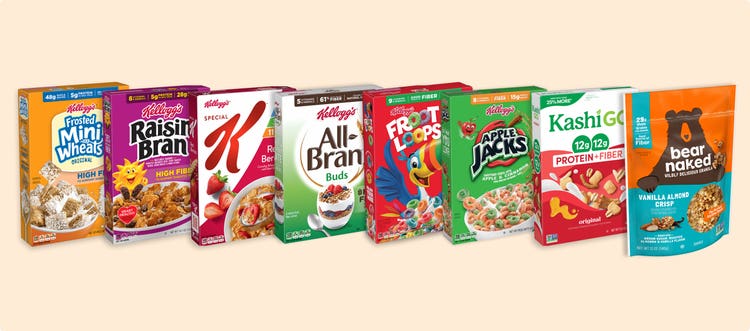
Wellness starts with fiber, but over 90% of people don’t get enough.2 Our fiber-focused cereals can help people close that gap. All-Bran® Original was among the first fiber focused cereals, launched almost a century ago!
- Cereal brings fiber to the table, from whole grains and bran known to support digestive health and encourages pairing with other fiber containing foods like fruit.
- We have more than 140 options that are at least a good source of fiber with 3-17g per serving, making it easy to find your fiber fix.
Featured Recipes

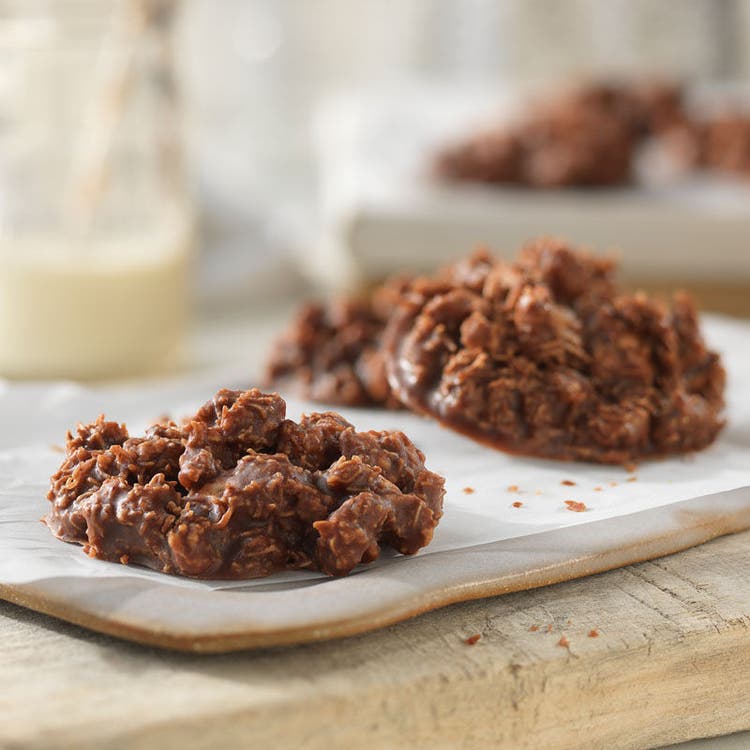
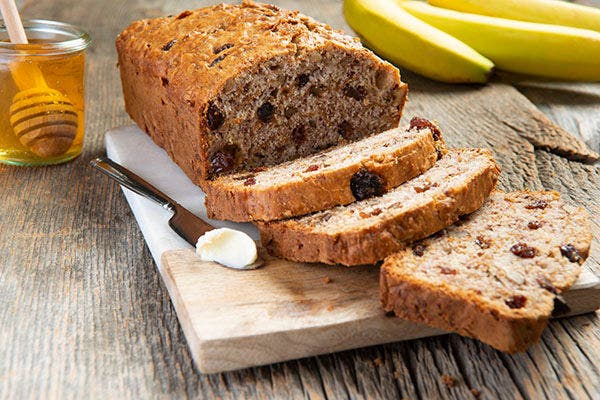
- U.S. Department of Health and Human Services, Centers for Disease Control and Prevention, General Population, children ages 2-17 years old, [2017-2018].
- U.S. Department of Agriculture; Agricultural Research Service. What We Eat in America: Nutrient intakes from food by gender and age. National Health and Nutrition Examination Survey (NHANES) 2009-10.
Did You Know
- Over 90% of cereal is consumed with milk.1
- Cereal is among the top foods fruit is paired with.2
- Kids who eat cereal consume 50% more milk than those who don’t eat cereal.1
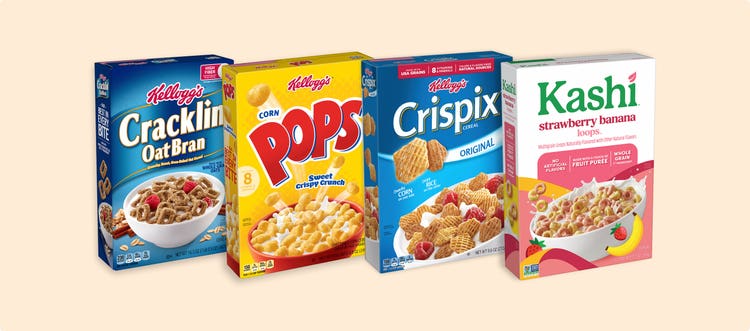
Cereal makes it easy to create balanced meals, bringing whole grains, fruit, and dairy together to give people choices they can feel good about.
- Fortified ready-to-eat cereal is associated with increased diet quality as it often acts as a carrier food that increases milk and fruit intake.3
- Building a bowl of cereal also fosters independence and choice. When mornings start early, cereal gives kids the ability to build a meal on their own by selecting a favorite cereal and adding other nourishing toppings.
Featured Recipes
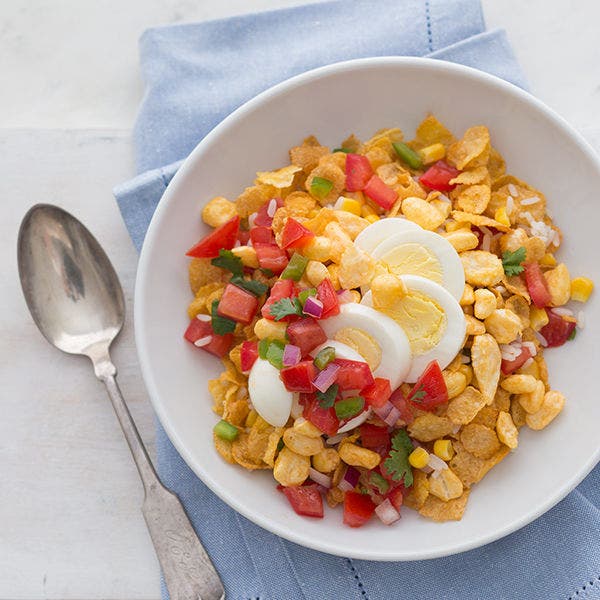

- Smith, J. D., Zhu, Y., Vanage, V., Jain, N., Holschuh, N., & Hermetet Agler, A. Association between ready-to-eat cereal consumption and nutrient intake, nutritional adequacy, and diet quality among infants, toddlers, and children in the national health and nutrition examination survey 2015–2016. Nutrients (2019) 11:1989. doi:10.3390/nu11091989
- 2020 PBH State of the Plate: America's Fruit & Vegetable Consumption Trends.
- Wallace, T. C. (2025). Defining “Carrier Foods” – A Novel Basis for Evaluating Indirect Contributions to Diet Quality. Journal of the American Nutrition Association, 1–4. https://doi.org/10.1080/27697061.2025.2571635
Did You Know
- Cereal is the #1 source of iron and folate in the diets of US children and adults.1
- Cereal with milk is the #2 source of vitamin D and magnesium in US children’s diets.1
- Cereal eaters get more key nutrients, but no more sodium or saturated fat than those who don’t eat cereal.1
Cereal provides essential nutrients and supports positive dietary patterns, helping people meet recommended intakes of key vitamins and minerals.
-
People who eat cereal and milk get more key nutrients than those who don't eat cereal, including under consumed nutrients like vitamin D, calcium, iron and folate.2
-
For under $1 per serving, a bowl of cereal can bring several key nutrients from grains, milk, and fruit together.3
- Kellogg’s® cereal can provide iron, folate and B vitamins.
- Milk provides calcium and vitamin D.
- Fruit provides vitamin C and other key nutrients.
Featured Recipes
- Zhu, Yong, et al. “Ready-To-Eat Cereal Is an Affordable Breakfast Option Associated with Better Nutrient Intake and Diet Quality in the US Population.” Frontiers in Nutrition, vol. 9, 9 Jan. 2023, https://doi.org/10.3389/fnut.2022.1088080.
- Zhu Y, Jain N, Vanage V, Holschuh N, Agler A, Smith J. Association between ready-to-eat cereal consumption and nutrient intake, nutritional adequacy, and diet quality in adults in the national health and nutrition examination survey 2015–2016. Nutrients. (2019) 11:2952. doi: 10.3390/nu1112295
- Based on the average national price of a serving of Kellogg’s cereal products with 4 or more servings per container, ¾ cup unflavored milk, and 2oz of bananas, apples, or strawberries. (Circana, L52W ending July 13, 2025)
Did You Know
- Cereal eaters get no more added sugar in their diet than those who don’t eat cereal.1
- Kellogg’s® has tasty options with single digit added sugar per serving like Kellogg’s Raisin Bran® and Kellogg’s Frosted Flakes® 25% Less Sugar.
- Cereal drives intake of key nutrients and food groups, unlike the top sources of added sugar.2
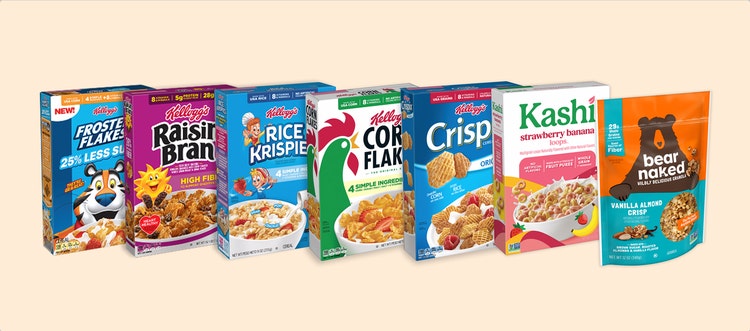
Cereal offers a variety of sugar levels to fit your lifestyle, including options with single-digit added sugar- so you can enjoy great taste and nutrition.
- Cereal is not one of the top 5 contributors of daily added sugar intake in US diets.3
- Nearly half of our cereals have 10 grams or less of added sugar per serving, and over 75% of our cereals have 12 grams or less of added sugar per serving – that’s less than 50 calories from added sugar.4
Featured Recipes
- Zhu, Yong, et al. “Ready-To-Eat Cereal Is an Affordable Breakfast Option Associated with Better Nutrient Intake and Diet Quality in the US Population.” Frontiers in Nutrition, vol. 9, 9 Jan. 2023, https://doi.org/10.3389/fnut.2022.1088080.
- Zhu Y, Jain N, Vanage V, Holschuh N, Agler A, Smith J. Association between ready-to-eat cereal consumption and nutrient intake, nutritional adequacy, and diet quality in adults in the national health and nutrition examination survey 2015–2016. Nutrients. (2019) 11:2952. doi: 10.3390/nu1112295.
- U.S. Department of Health and Human Services, Centers for Disease Control and Prevention, General Population, children ages 2-17 years old, [2017-2018].
- Based on 2024 North American sales volume.

Nutrition Facts

Our WK Kellogg Co Nourishing Food Criteria
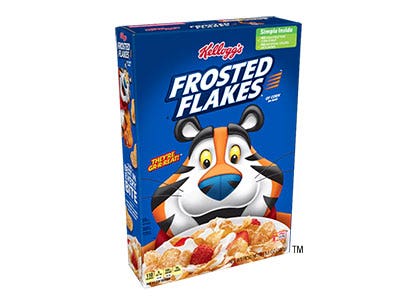
WK Kellogg Co Provides Low FODMAP Certified Cereals

WIC - WK Kellogg Co

Our Transparency Commitment