Natural Colors in WK Kellogg Co Cereals: What We're Changing and Why
Our Commitment
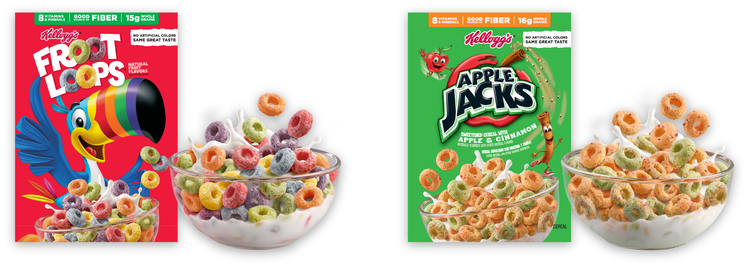
WK Kellogg Co is accelerating its timeline to eliminate artificial colors from its full cereal portfolio and will complete the transition by the end of 2026, one year ahead of its original commitment. We are also ahead of schedule in removing the preservative BHT from the small amount of cereal packaging that contains it today.
Production of cereals with the new recipes, including Kellogg's Froot Loops and Kellogg's Apple Jacks, will begin in 2026, with food shipping to retailers before year-end.
Key Facts
Which cereals are included?
The transition includes the remaining cereals in the full portfolio that still contain artificial colors, including Kellogg's Froot Loops and Kellogg's Apple Jacks.
What colors will be used instead?
The company will use colors derived from natural sources, including fruit and vegetable juices, as well as plant-based ingredients.
Will consumers notice a difference?
Consumers can continue to expect the same great taste and the colorful experience they know and love. WK Kellogg Co conducted extensive consumer testing to help ensure the updated recipes deliver the quality, aroma and taste consumers expect.
When will products arrive in stores?
Production of cereals with the new recipes will begin later this year, with food shipping to retailers before year-end. Consumers will begin seeing the updated products as inventory transitions.
Why We're Making This Change
Consumers are increasingly looking for foods made with simple, recognizable ingredients. This transition reflects our ongoing commitment to evolving our cereal portfolio to meet changing consumer preferences while maintaining the taste, quality and nutrition consumers expect from our trusted brands.
The announcement also reflects significant progress in product development, ingredient sourcing, manufacturing readiness and consumer testing, enabling us to move a full year ahead of our original schedule.
Part of our Journey
This milestone builds on WK Kellogg Co's long history of advancing nutrition and evolving its portfolio to meet changing consumer needs. That work includes increasing whole grains and fiber, reducing sugar and sodium, and delivering essential vitamins and minerals families typically do not get enough of.
This transition to natural colors is part of the company’s promise to Make Eating Well Easy through its new SPOONS on-pack nutrition guide.
WK Marketing & Communication Guidelines
Our founder, W.K. Kellogg set the tone for our continued commitment to protecting and promoting consumer confidence when he put a name on every product as a person assurance of quality. We continue to be committed to responsibly marketing and communicating the intrinsic quality of our brands so that our consumers can make informed choices.
The guidelines are the basis for our consumer communications, ensuring that we have uniform standards of marketing and communication wherever we market our products.
Download our WK Marketing & Communication Guidelines to learn more about our marketing to children commitment, including what and how we market to kids.