Did You Know

Did you know a bowl of cereal and milk can provide over 10g of protein and be a nutritious breakfast?
Did you know Kellogg offers many cereals with 5g of added sugar or less?
Let’s Talk Sugar
Look past the headlines and get the facts on sugar
Sugar is a hot topic at the moment – breakfast cereal is often drawn into the conversation and not always in a fair or factual way. What we do know from the latest nutrition surveys in Canada is that breakfast cereal contributes very little to our overall daily sugar intake – less than 5% to be exact. Cereal delivers many important nutrients, such as vitamins and minerals, and many cereals provide fibre. As well, cereal is a carrier for other nutritious foods like fruit, milk and yogurt.
What Exactly Is Sugar?
Sugars are part of the carbohydrate family and come from a variety of different sources. There are naturally-occurring sugars such as lactose in milk or fructose in fruit, and there are added sugars like white and brown sugar, honey and syrups. All sugars are broken down in the body into glucose for energy.
How Much Should I Be Having?
Health Canada recommends that Canadians consume no more than 100 g of sugar per day.
Why Add Sugar?
Besides the obvious answer, taste and sweetness, sugar plays a number of other functions in food. Sugar adds crunch and texture, acts as a preserve to help foods stay fresh, and promotes browning in baking.
Kellogg's® Has Tasty Cereals to Help Manage Your Sugar Intake
Are you managing your family's sugar intake? Kellogg’s has four tasty “sugar wise” options you can choose from. Rice Krispies®, Kellogg’s Corn Flakes®, Crispix® and Special K® Original cereals have simply 1 to 4 g of sugar per serving.
What Makes a Nutritious Breakfast
Breakfast is the first opportunity in the day to get onto the nutritional front foot.
It’s a Simple Equation
Making your breakfast count towards meeting your daily nutrition needs is easy. Just follow this simple formula to build a nutritious and delicious breakfast. Some people enjoy having the same breakfast everyday and others love to mix it up. Whatever your preference, if you include three food groups you are right on track. You can mix and match them as you like.
Go with the Grain
Start building your breakfast with a serving of nutritious grains such as high fibre or whole grain cereals. A cup of cereal such as Raisin Bran® cereal should do the trick. Or, you can be really adventurous and mix two or three of your favourite cereals to create a new taste sensation.
Dairy, anyone?
If it’s milk you love, then go for it. On a cold winter’s morning, try heating your milk and pouring it on Mini-Wheats® cereal. Alternately, a fortified plant-based beverage is a great addition to any breakfast bowl!
Yogurt is delicious too. There’s nothing like smooth, creamy yogurt with crunchy and crispy cereal flakes.
Get your Fruit On
Breakfast is the perfect meal to add the fresh goodness of fruit. Bananas, strawberries and blueberries all make wonderful partners with cereal. Crispy grain notes with tangy fruit sweetness – yum! You can also get creative…a handful of fresh berries, sliced kiwi or melon are perfect for decorating waffles.
But Wait There’s More
Adding a few nuts and seeds can add extra crunch and make breakfast even more tasty. It’s a great way to experiment with different ingredients and create your own idea of breakfast heaven.
Want to know more about how to get the best from your breakfast? Just ask us – we love sharing ideas for delicious breakfast creations!
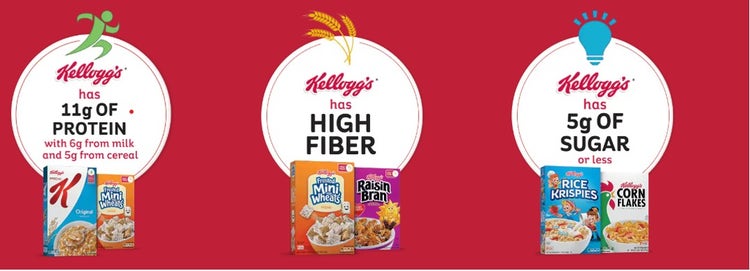
Did you know Kellogg’s has more than 30 cereals that are a good or excellent source of fiber?
Fiber helps support digestive health and overall wellness, and Kellogg’s cereals - like Kellogg’s® Raisin Bran or Kellogg’s ®Frosted Mini-Wheats® - are easy, tasty ways to get more of the fiber you need!
When it comes to fiber...Kellogg is here for you. Fiber helps support digestive health and overall wellness, and Kellogg’s cereals - like Kellogg’s® Raisin Bran or Kellogg’s® Frosted Mini-Wheats® - are easy, tasty ways to get more of the fiber you need!